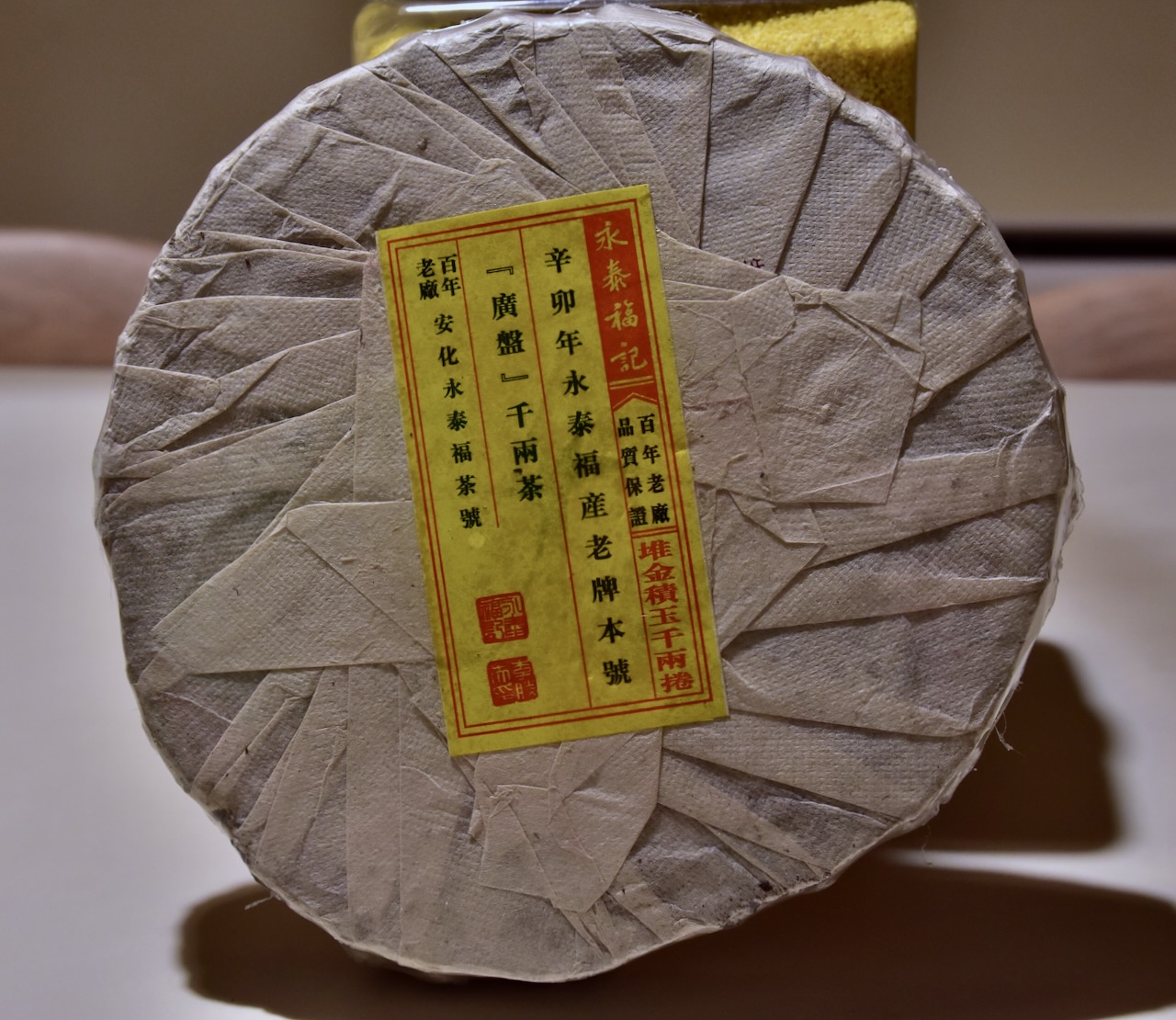
- Production year: 2011
- Storage: Hunan
- Month cut: Unknown (this log was released pre-sliced by Yongtaifu)
- Log weight: 36.25 kg
- Slice weight: ~650g / slice (+/- 10%)
- Price: USD 45 / slice
- Availability: Out of stock
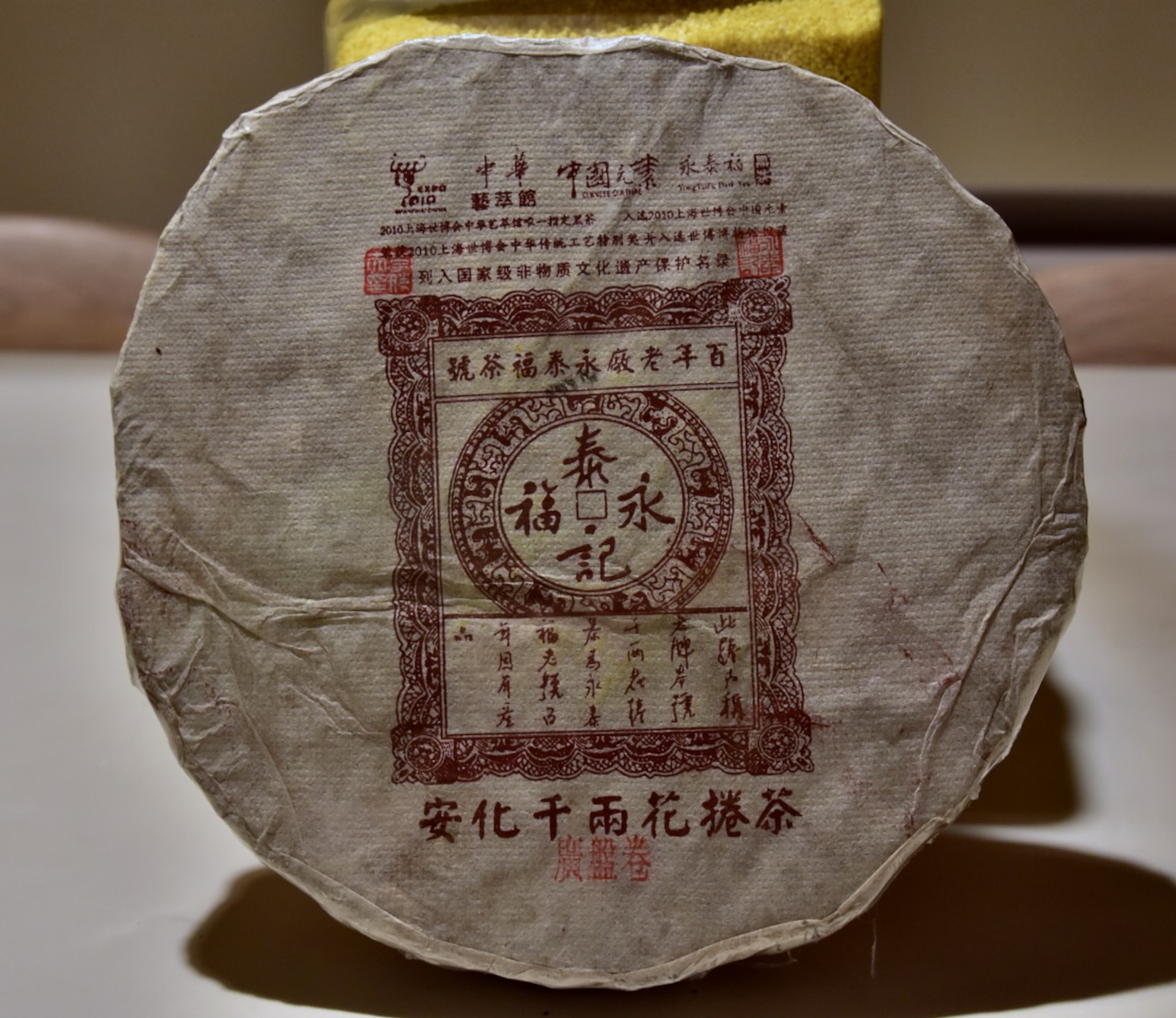
For a background on Yongtaifu (永泰福), see the listing for the 2010 Furong QLC.
Within QLC production, “Guangpan” (广盘) processing is distinct from the more common “Chunzhuang” (春庄) processing. You’ll be excused for never having heard these terms before, neither had I until recently and apparently it is pretty much only Yongtaifu that bothers with keeping the QLC taxonomy alive these days.
Historically these terms didn’t imply processing differences, rather they referred to the time of production. Chunzhuang rolls were made during spring, Guangpan during autumn. Due to the climate differences of the seasons these teas would see very different transformations during the typical transportation route from Anhua to Shanxi. The spring rolls, transported shortly after being produced, would normally be exposed to humiture suited for jinhua development. The autumn rolls, on the other hand, would typically be dried out long before jinhua growth would have happened.
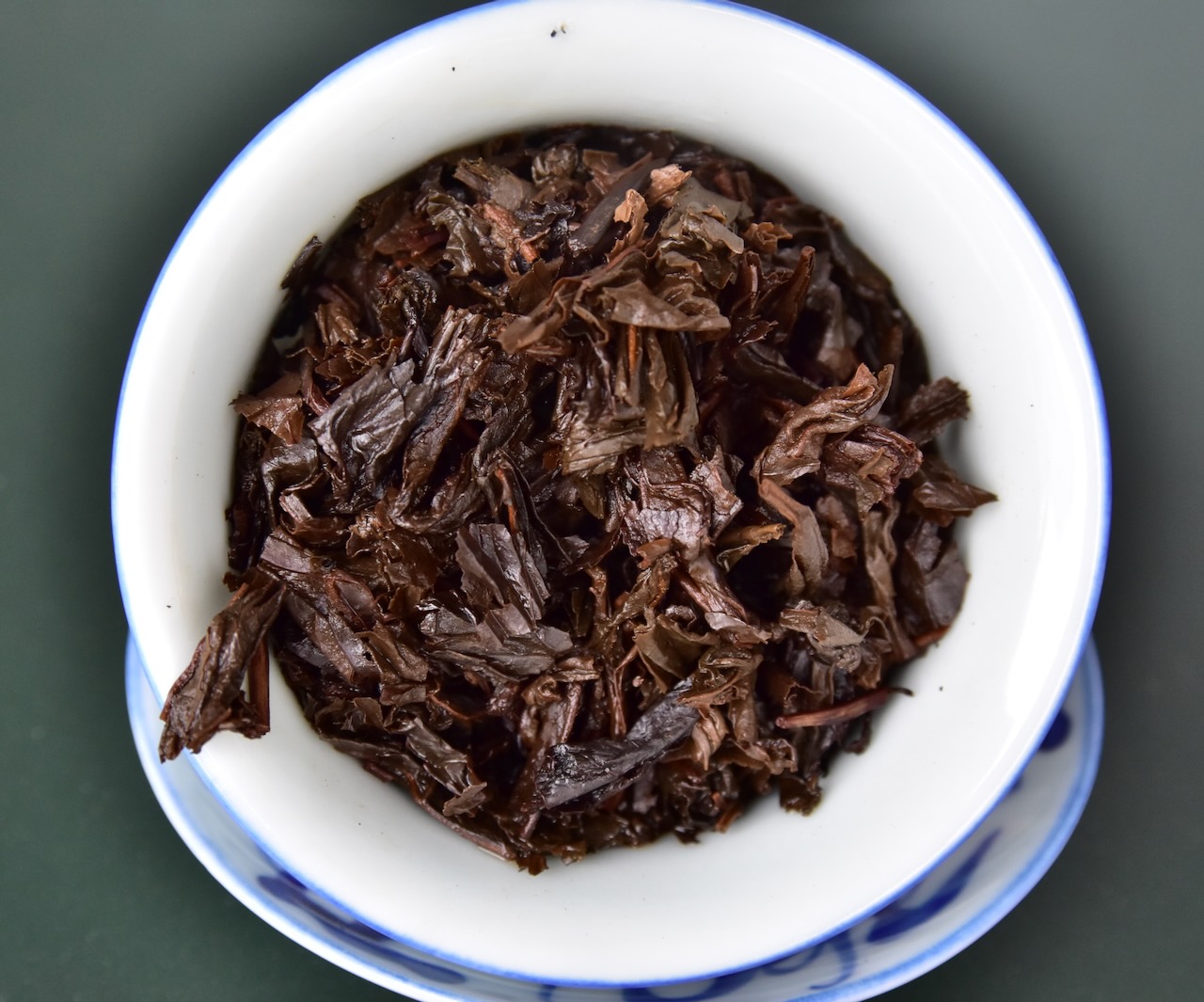
Modern production of Guangpan QLCs tries to reproduce these differences through controlled processing, specifically a more thorough drying either before the logs have been pressed or through temperature adjustments during the greenhouse storage phase. (This makes them less likely to grow jinhua, but the growth can still happen over time if the storage conditions are right; the tea on offer here does have jinhua).
In terms of practical effects on the cup of tea, Guangpan QLCs tend to be more robust and assertive/domineering (霸气). They are not considered optimal to drink before 10-15 years have passed, and for this reason the Guangpan processing is rarely used. Chunzhuang style QLCs, on the other hand, tend to be smoother from the outset.
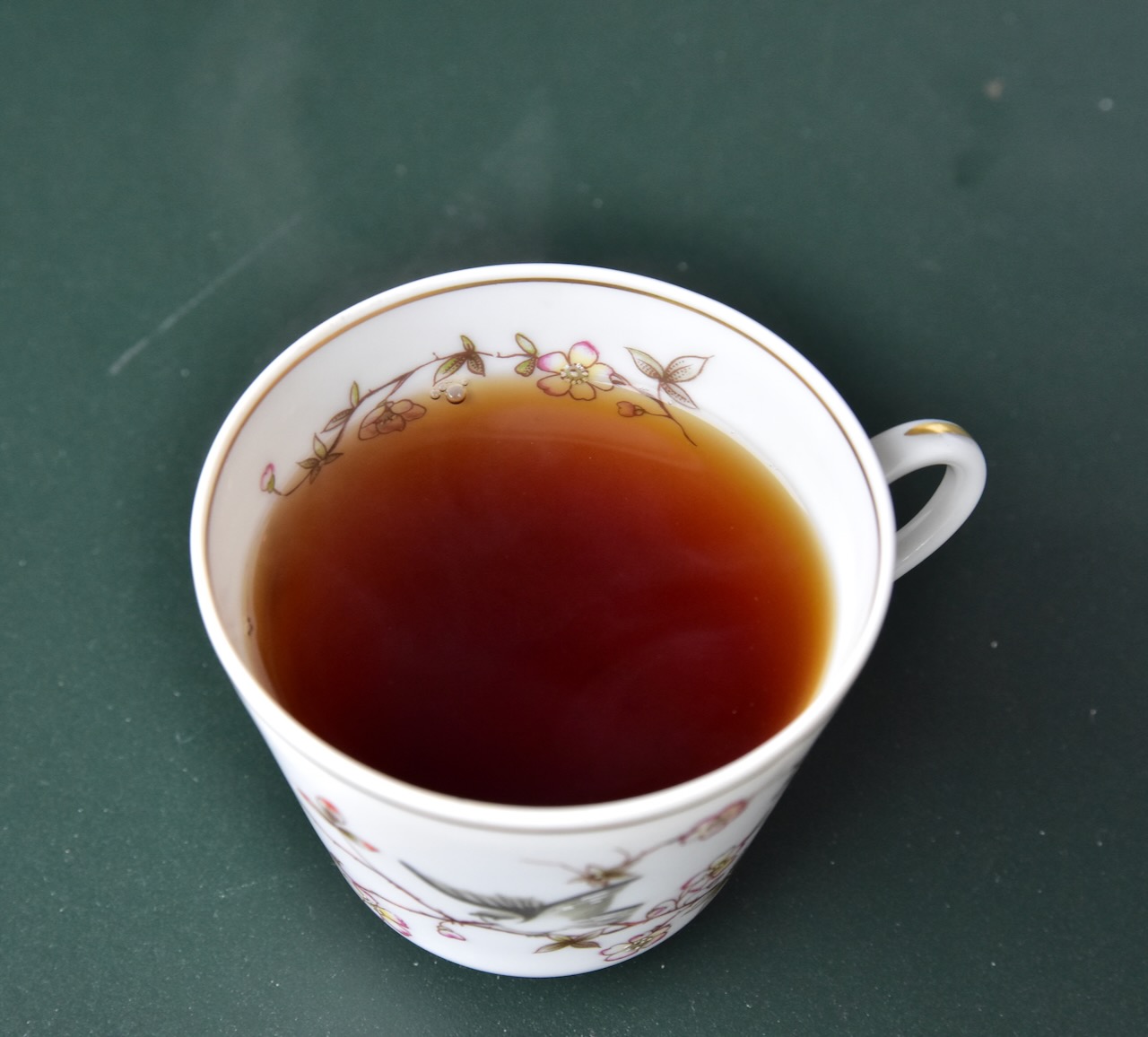
This is the only QLC I have had that is explicitly labeled as being Guangpan processed. It is warming, with a good body feel. The notes go into the territory of dried fruits with hints of vanilla, chocolate and even some marzipan. A very different profile from the other Yongtaifu QLCs I have had. Without being sure of why, I think this is something I would recommend to people into liubao.
I recommend breaking this up a bit and giving this some extra breathing time, it really opened up after a couple of weeks for me.
Note: This tea may contain golden flowers (Jinhua/金花), a perfectly natural occurrence in certain heicha teas. Their development depends on factors like microbial activity, storage conditions, and time. However, individuals with Celiac Disease or severe gluten allergies should exercise caution, as we cannot guarantee that no wheat-based materials were involved at any stage of production.