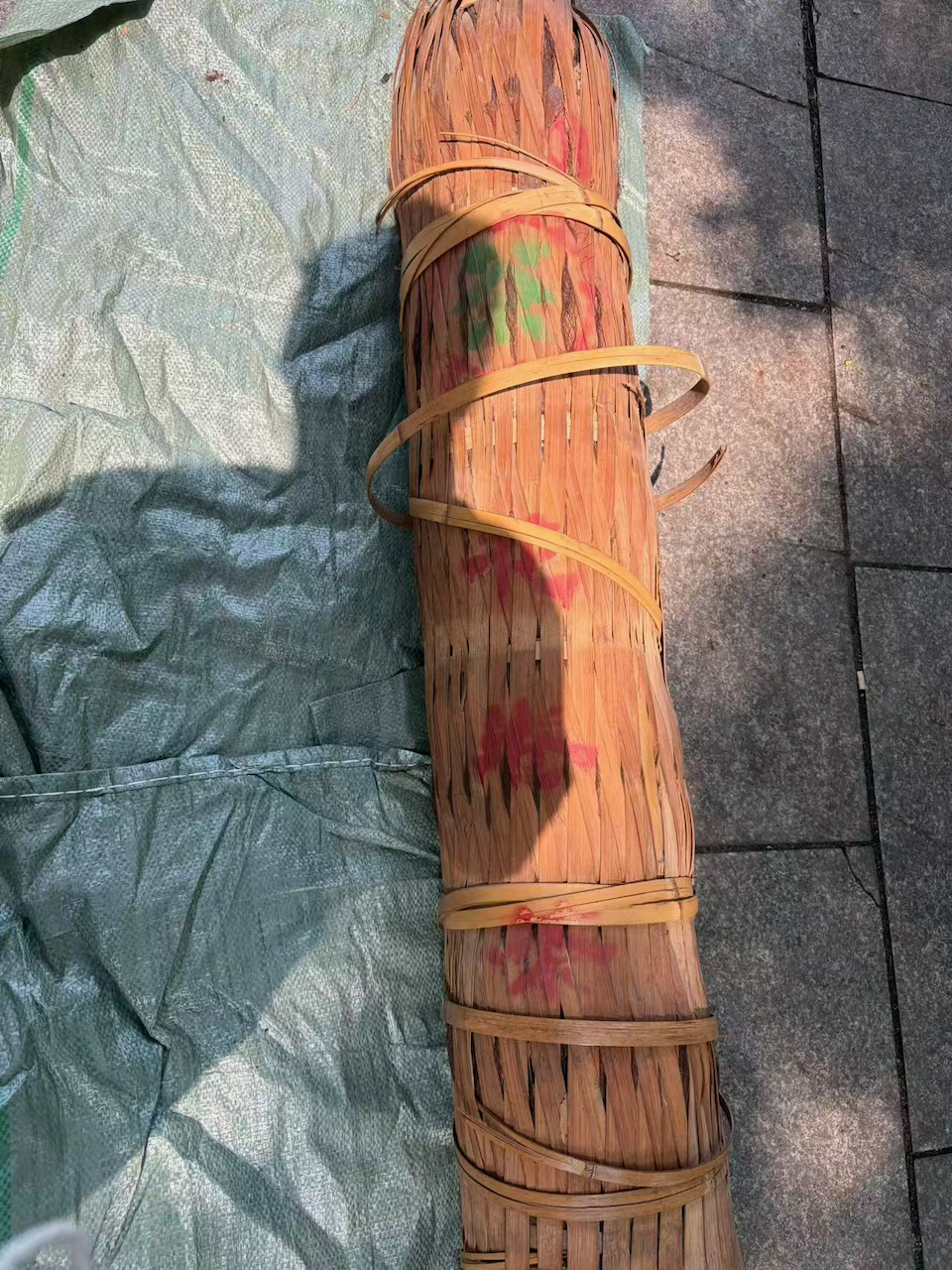
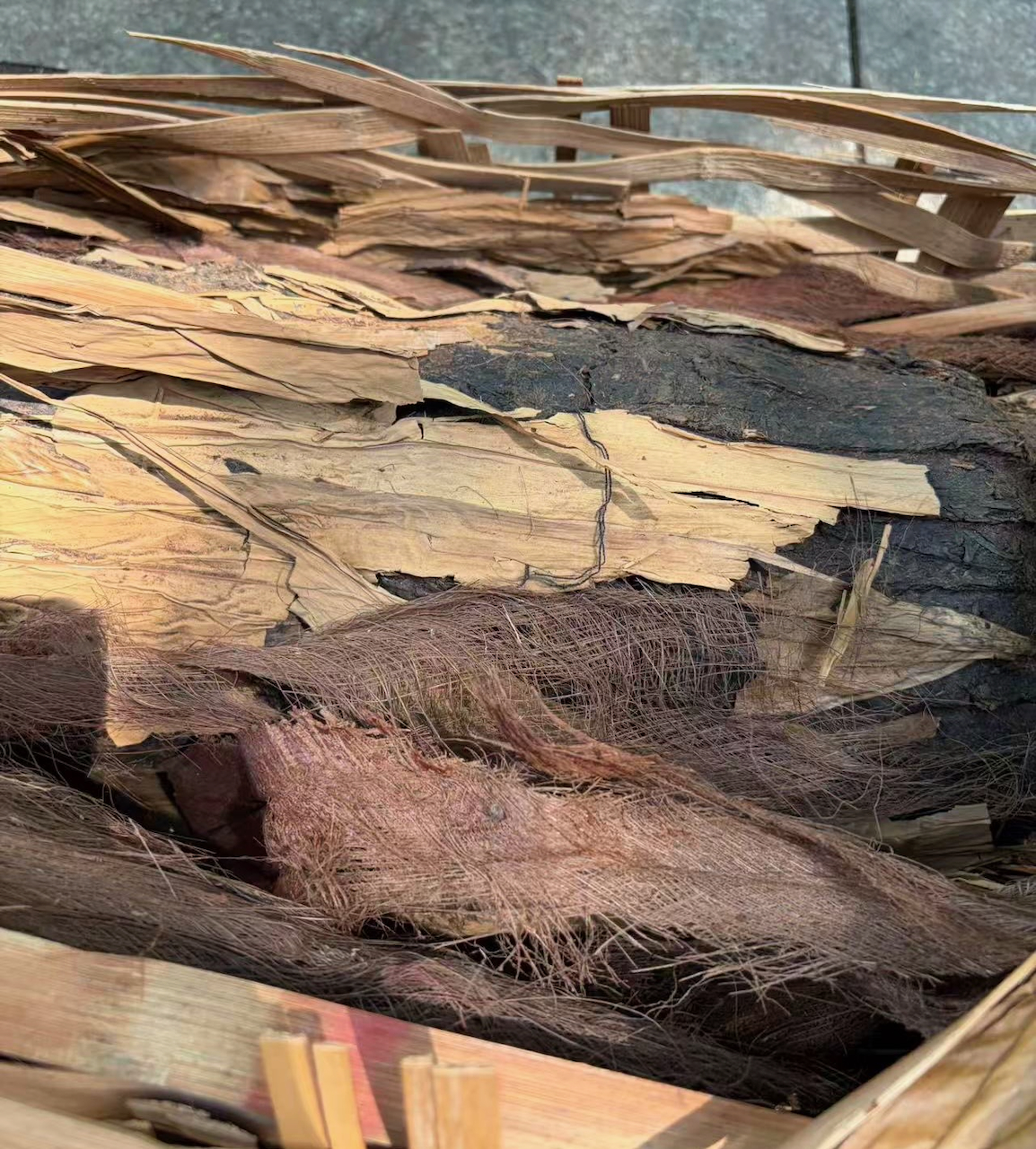
- Production year: 2006
- Storage: Guangdong
- Month cut: August 2026
- Log weight: 36.25 kg
- Slice weight: ~600g / slice (+/- 10%)
- Price: USD 50 / slice
- Availability: In stock
I’ve mentioned before how Zhongcha (中茶) rarely gets people exited, being a massive “jack of all teas” with huge output volumes when viewed as a whole. Whatever you think about the quality of their typical output in any genre of tea these days, the history of Zhongcha is (at least to me) as interesting as it is confusing, with the ownership of the brand, organization of productions/export and the factories that actually produced and pressed the teas being separate questions. At least in the case of Anhua heicha even productions that are “quite recent” (to millennials such as yours truly), such as this 2006 Qianliangcha, have very little publicly available information. In short, precise provenance is difficult.
China Tea Hunan Anhua No. 1 Tea Factory (中茶湖南安化第一茶厂) is probably the best known of the Anhua heicha factories under the Zhongcha banner. It’s history dates back to the establishment of the Xinglong Mao Tea House (兴隆茂茶行) by Shanxi tea merchants in 1902, followed by a century-long string of mergers and restructurings of pre-existing companies and facilities (the details here are pretty messy but the larger lines are laid out in this Baidu entry).
In the early decades of “New China” the Anhua No. 1 Tea Factory factory mostly produced hongcha; heicha production supposedly made up very little of the output until around the mid-80s. The story about the factory’s Anhua heicha output between then and all the way until 2010 is pretty murky. The industry in general was in a pretty bad condition throughout the 90s and mid-aughts until new (largely government driven) interest (and money) was pumped into Anhua heicha from 2006. It seems Anhua No. 1 Tea Factory was more or less in hibernation mode for a long time and from factory representative Zhu Wenwu we can derive that it was only in 2011 the factory officially resumed operations, he describes the the years 2006-11 as a “restructuring period” (which squares with the low output volumes and trials and errors of the pre-COFCO years).
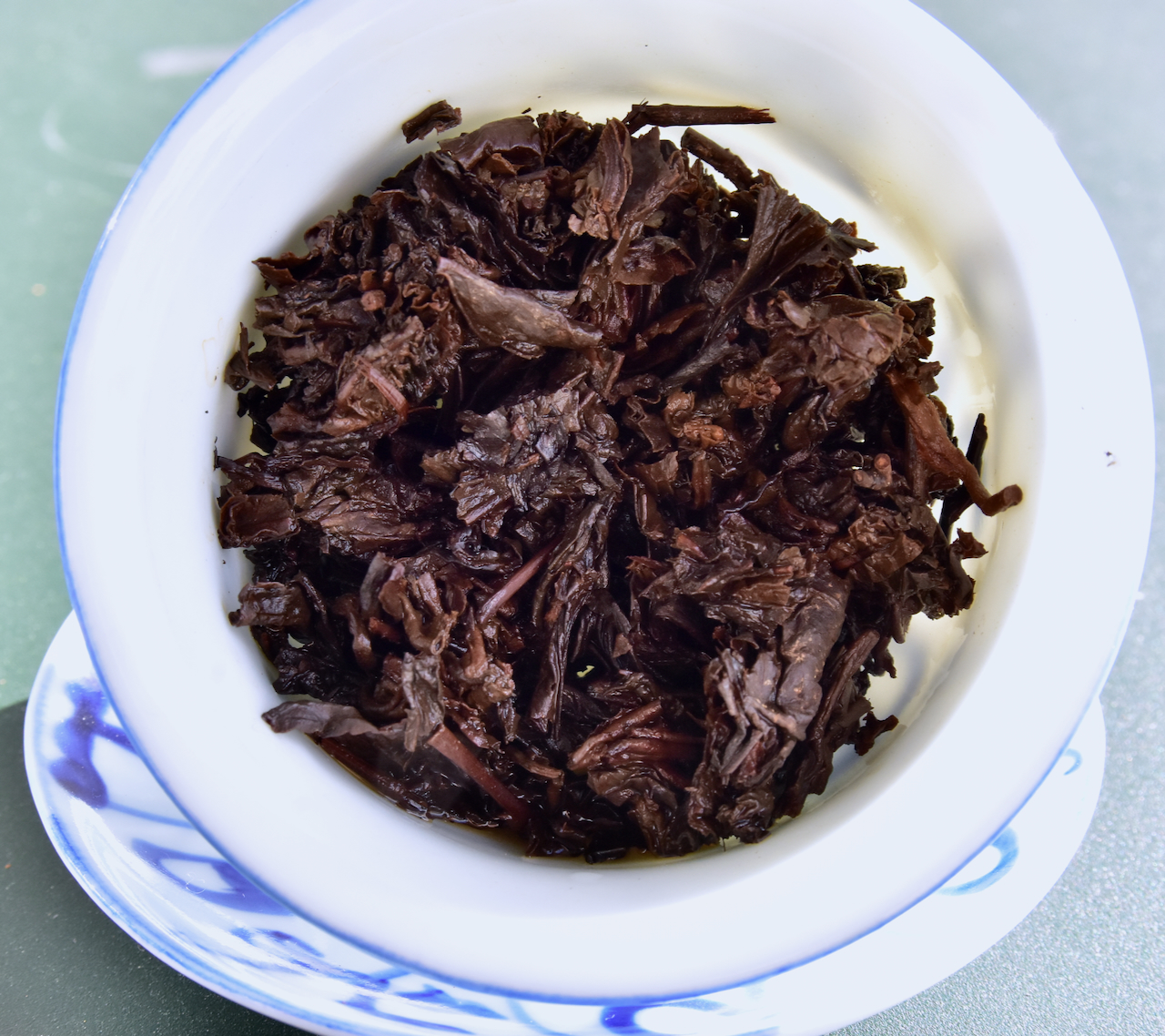
This 2006 log may be the output of this early trial stage of the Anhua No. 1 Tea Factory (and, profile and relative leaf choppiness considered, my hunch is that it is). It may also be a production by another factory; if that’s the case Sanli (三利) and Jiuyang (久扬) are possible candidates that produced teas under the Zhongcha branding at this point in time (but I have doubts about the latter, since other Jiuyang QLCs I’ve had from this period have a very different profile). Had this been a brick production we’d probably know for sure. Zhongcha QLCs didn’t contain much packaging information at this time (there was no product tag used here).
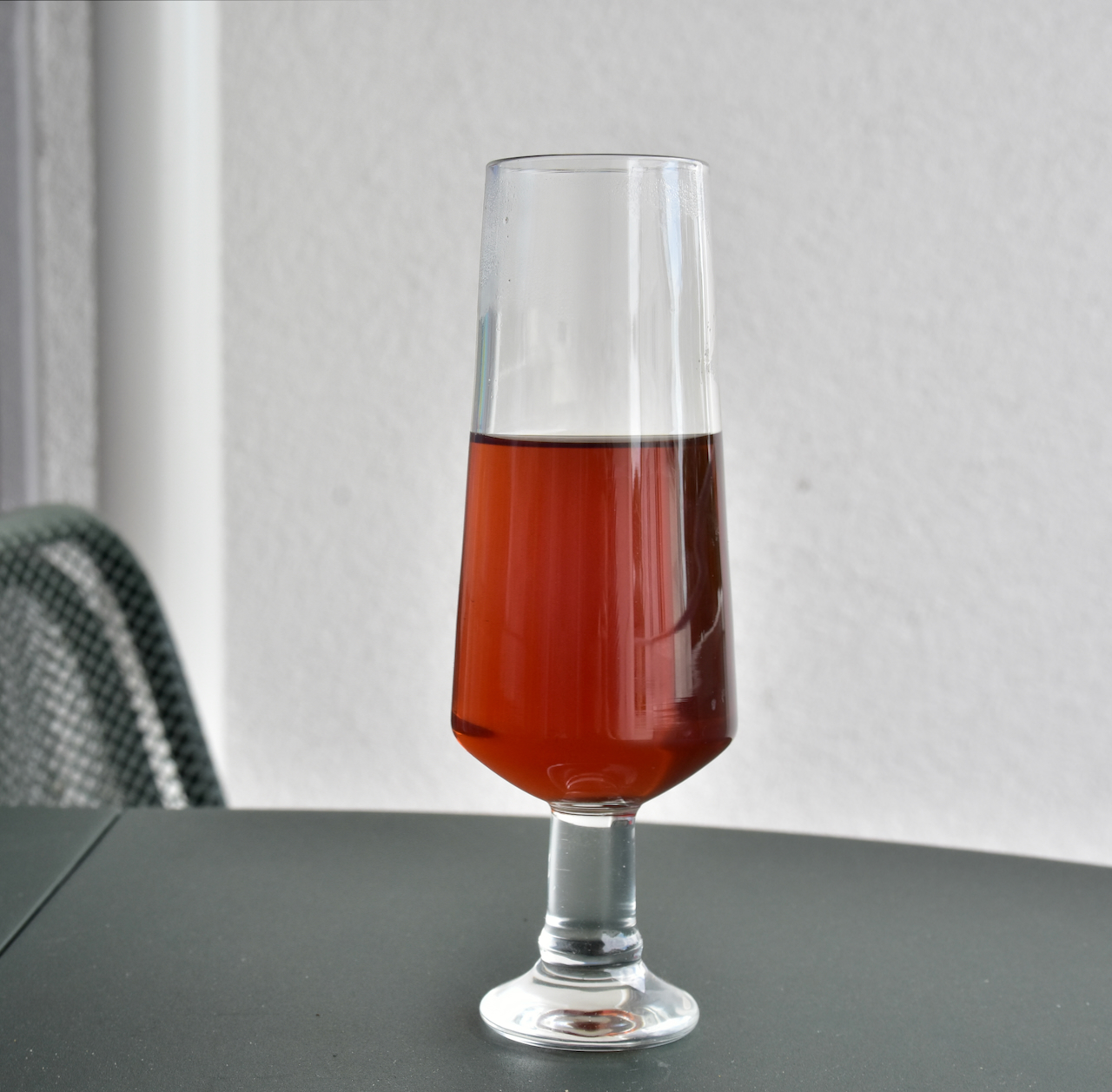
… in any case, this Guangdong stored log surprised me positively with it’s warming qualities and its not-easily-described-precisely-but-I’ll-still-try notes of dried fruits, camphor and some maple syrup and a touch of cinnamon in the background (more noticeable with a lower ratio).