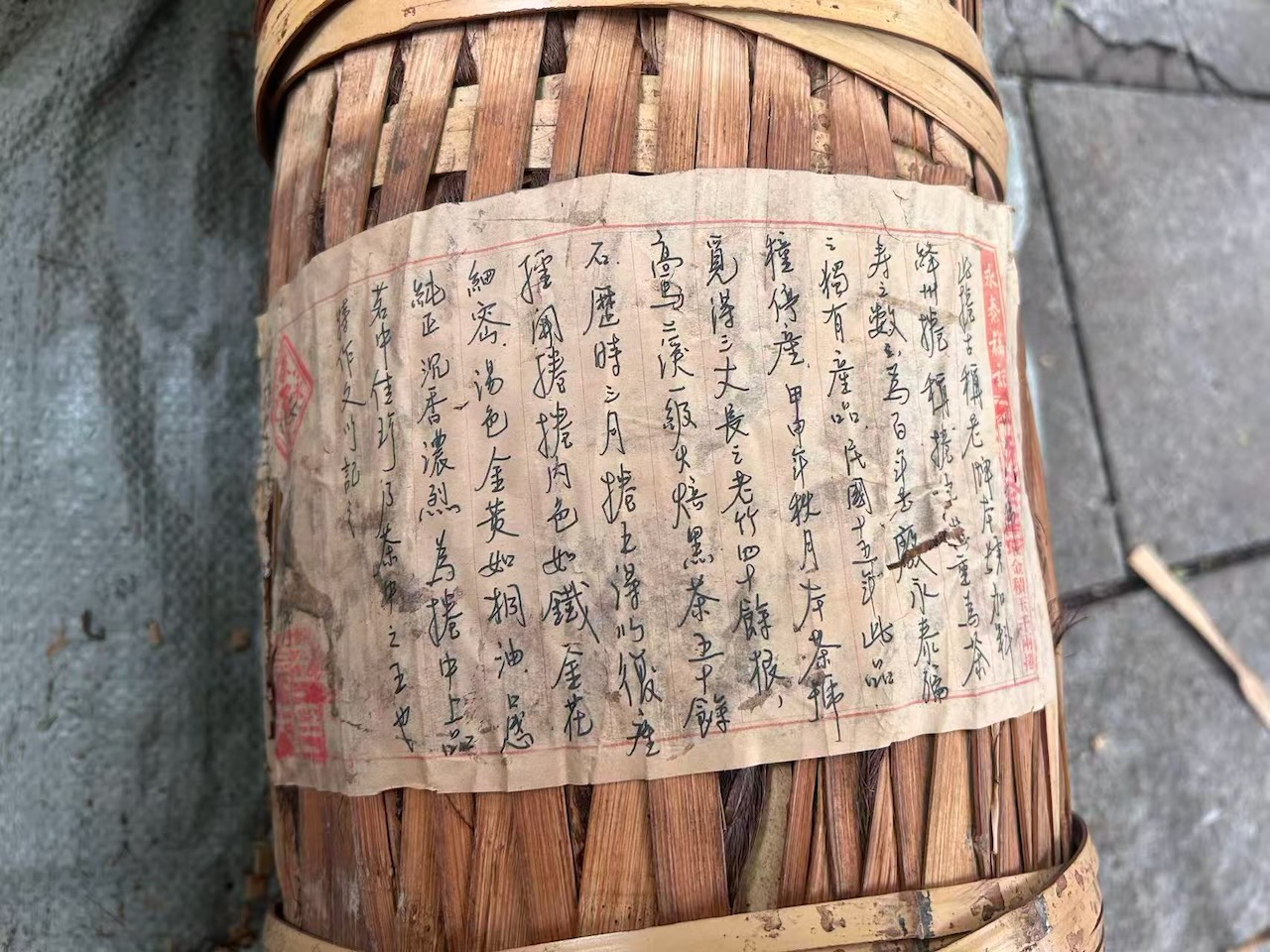
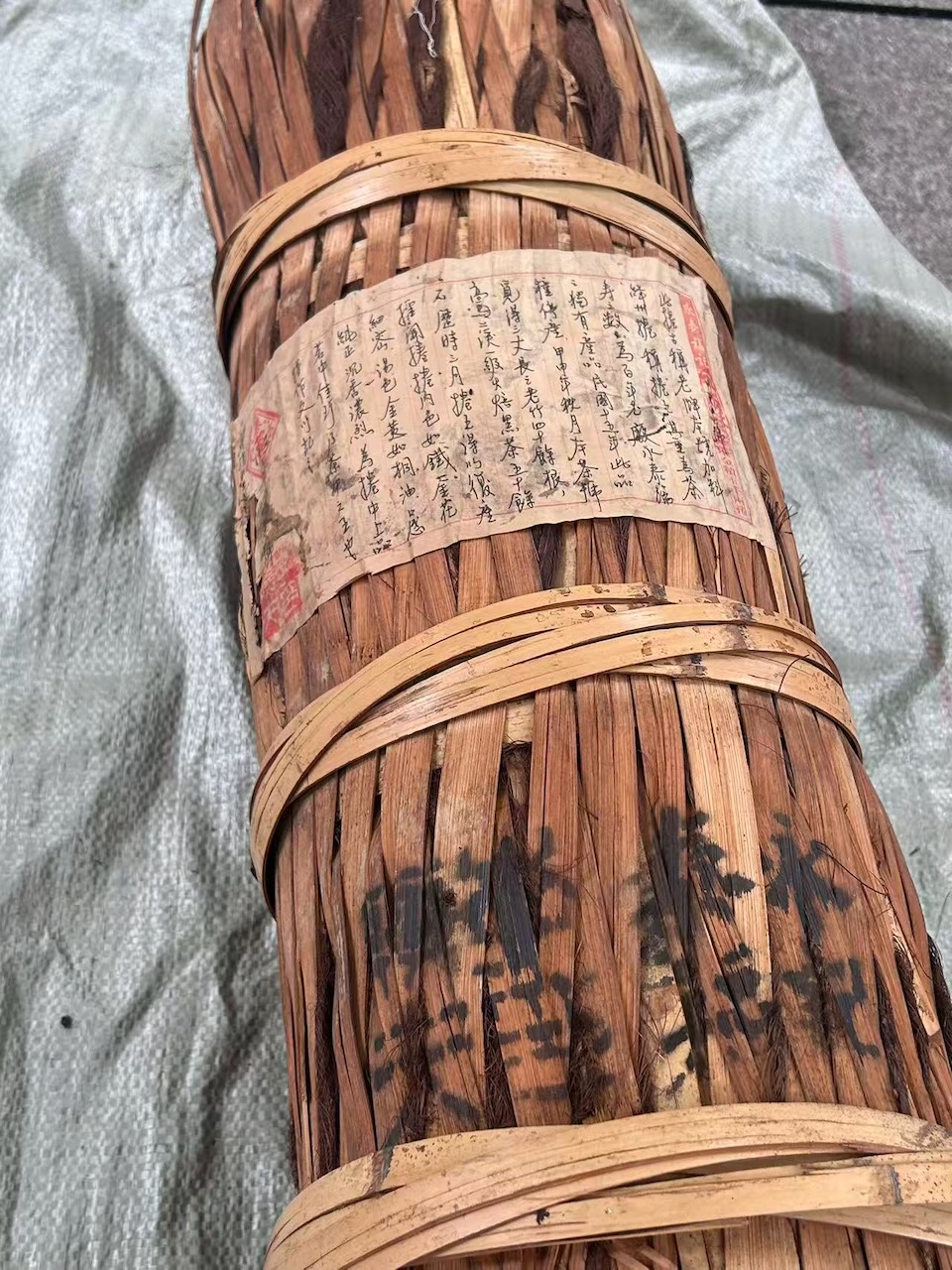
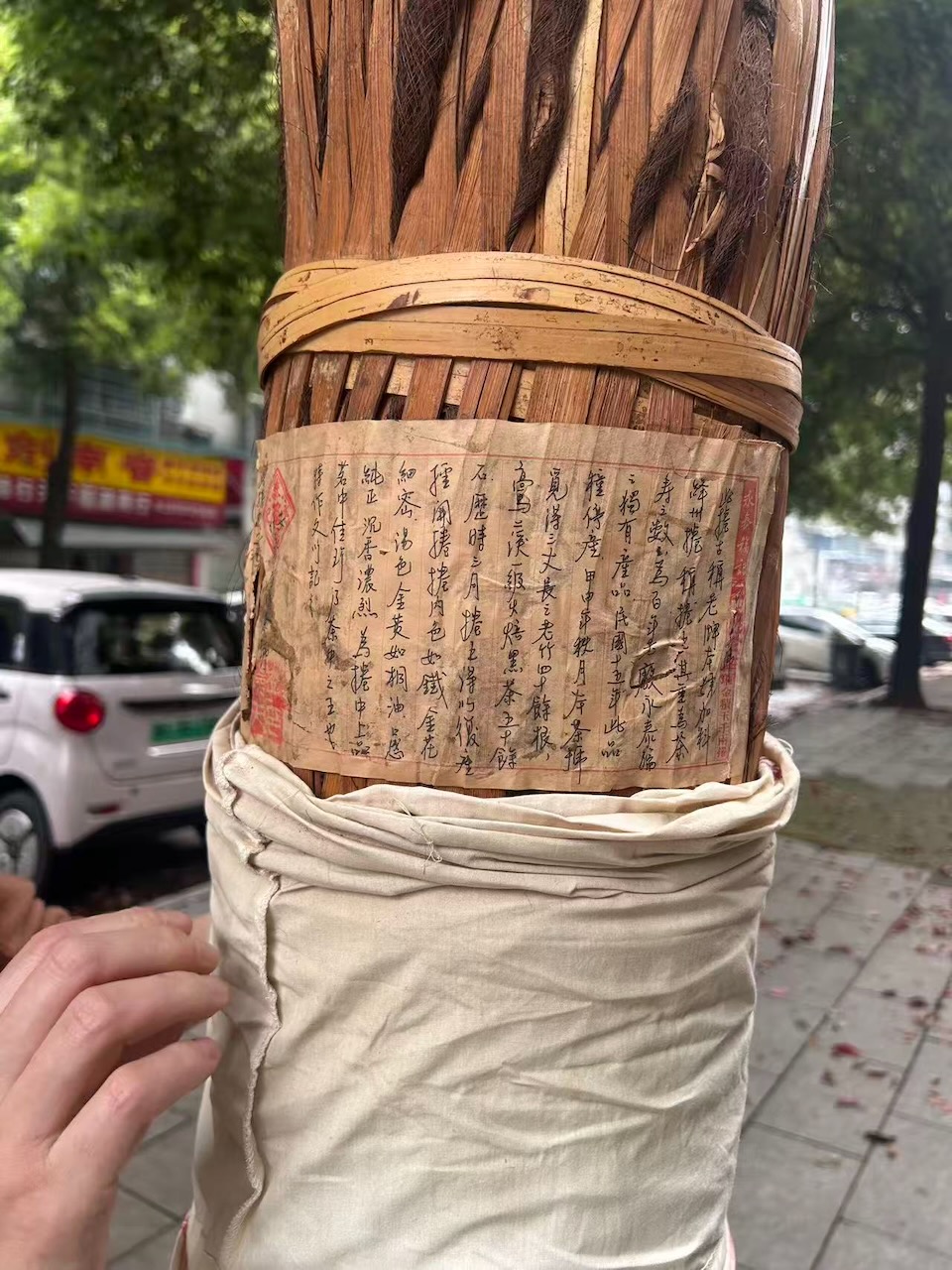
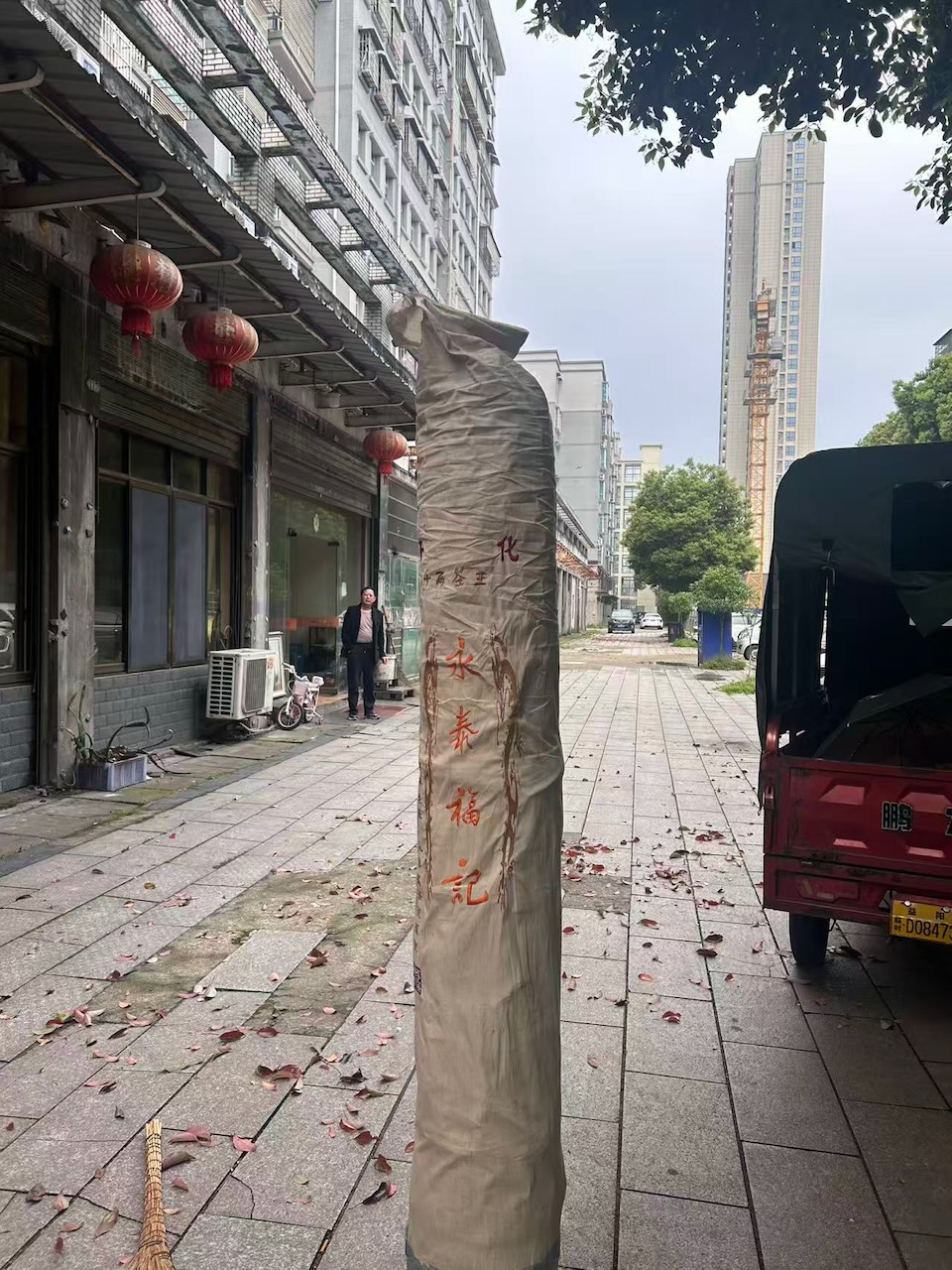
- Production year: 2004
- Storage: Hunan
- Month cut: April 2026
- Log weight: 54 kg
- Slice weight: ~700g / slice (+/- 10%)
- Price: USD 100 / slice
- Availability: Out of stock
For a background on Yongtaifu (永泰福), see the listing for the 2010 Furong QLC.
Yongtaifu was one of the earlier brands to resume production of Qianliangcha in 1999 (two years after Baishaxi). In the early days after resumption demand remained limited, production volumes were low and a lot of the finer points of the complex processing of this type of tea needed to be figured out after the forty-year hiatus (with the sole exception of the single 1983 batch produced by BSX) the category had endured. “Manuals” left behind supposedly didn’t go into enough details and the people with first-hand experience that were still around may only have had expertise in one (or a few) of the many complex processing steps. Even small local climate changes (temperatures, rainfall etc.) both from year-to-year and as lasting changes over the decades would necessitate tuning some of the parameters. Perhaps the best example of this is the “sun exposure and night dew” stage (in terms of seasonal timing, duration, placement of logs etc), and for those interested Wu Jianli has shared a bit of his experience with this (CN, EN).
All of this is a long-winded way of saying that the early days after resumption of QLC production saw the few makers that took part in production trying out a bunch of different stuff that would lead to different outcomes; failures, successes, improvements. Yongtaifu, despite the brand’s long history, was no exception in this regard. This 2004 production, the earliest QLC of theirs I’ve come across a whole log of on the market to date, was very ambitious for its time in at least three regards. It’s heavier than a normal QLC (at around 108 jin or 54 kg), highly compressed and contains mostly tender materials, all of these factors putting it at higher risk of moisture entrapment and “heartburn” (烧心). Impressively and/or luckily it ended up very nice.
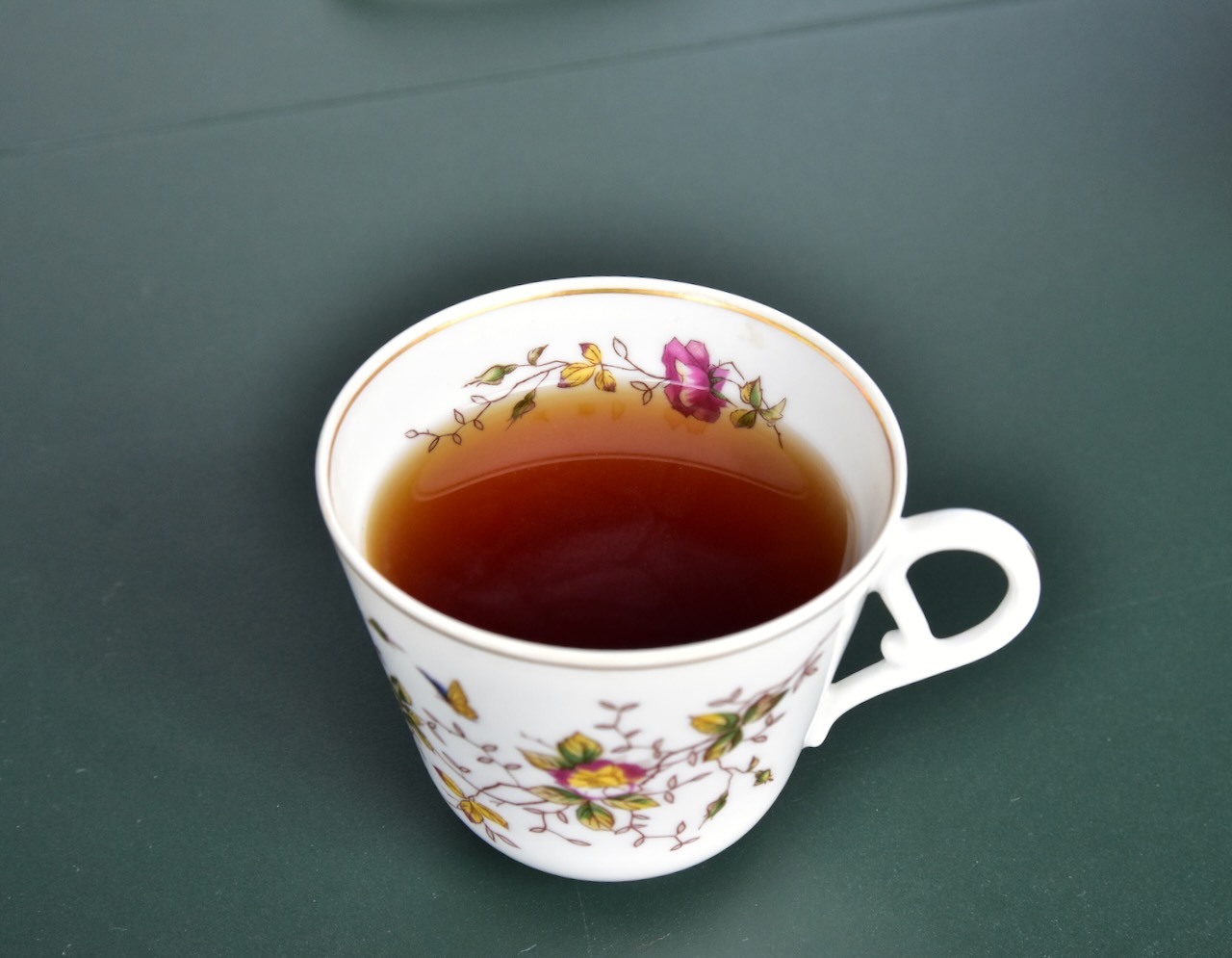
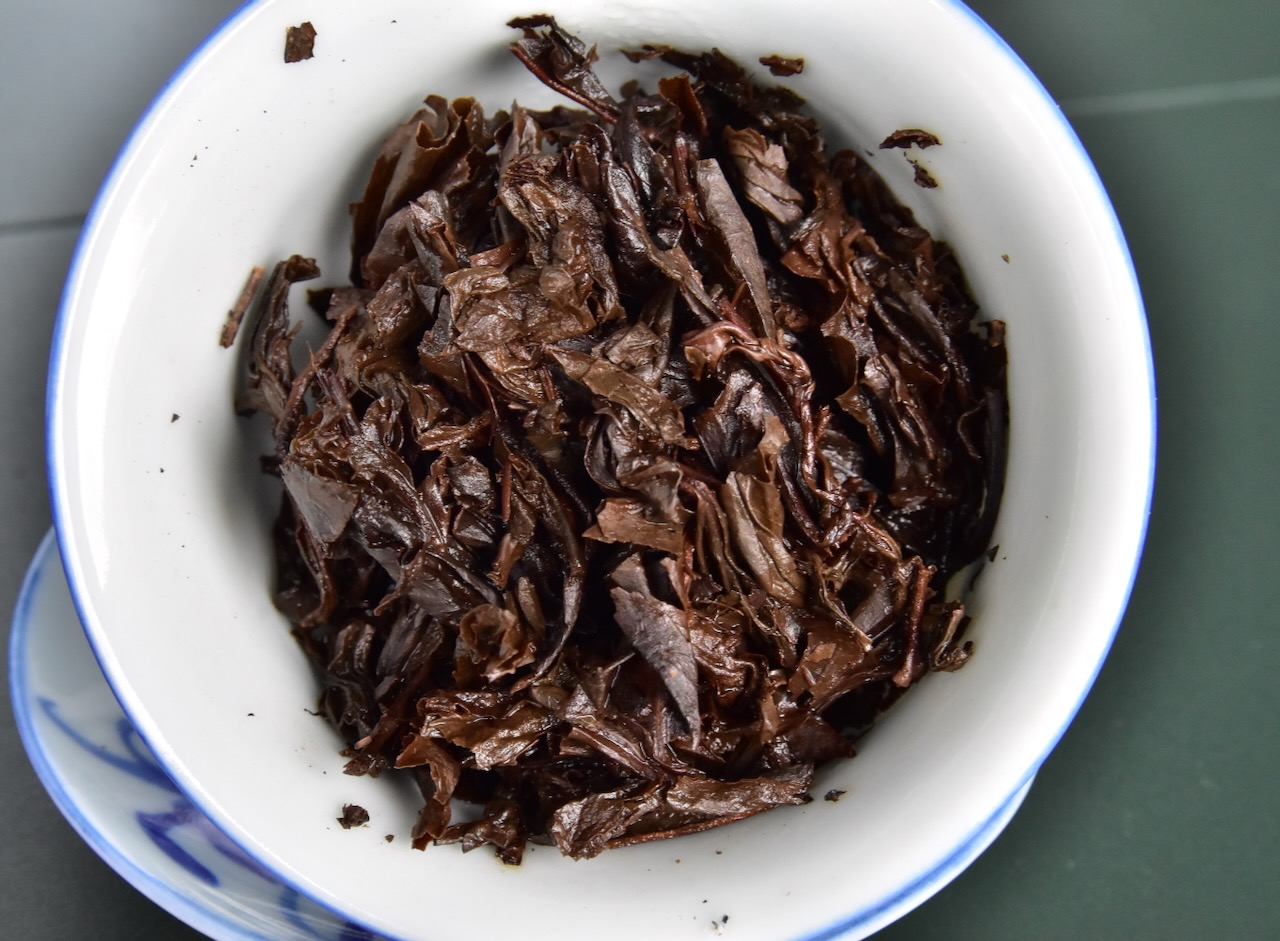
Gaomaerxi material, fully fire-roasted leaf (全火烧料), smooth with some fruitiness, a slight mintiness and some fungal aromas (the good kind) in the background. I recommend brewing this a bit on the lighter side (compared to my recommended general ratios), and not on an empty stomach (always good advice, but especially so for tian- and gongjian dominated productions).
Note: This tea may contain golden flowers (Jinhua/金花), a perfectly natural occurrence in certain heicha teas. Their development depends on factors like microbial activity, storage conditions, and time. However, individuals with Celiac Disease or severe gluten allergies should exercise caution, as we cannot guarantee that no wheat-based materials were involved at any stage of production.